Showing posts with label travel. Show all posts

Wednesday, June 10, 2015

Madrid: More Than My Dreams


For the first time in weeks I was actually busy. My parents had just left, I was in the middle of classes, and I had assignments due. It was the perfect time to take a holiday to Spain. Okay, so maybe the timing wasn’t perfect, but I managed to get everything done in time to leave. I left behind a rainy Vienna crowded with Eurosong tourists, and retreated to sunny Madrid.

I had written down a few highlights that I wanted to see in Madrid, but I was still unsure of what the city would be like. Would it be really hot? Would people be in the streets until three a.m.? Would it be grand and imperial or laid back? Turns out, whatever my expectations were, they were wrong. I could have never expected to love Madrid as much as I did.

I lucked out with the location of my hostel. It was right in the middle of the Barrio de las Letras. I couldn’t have been more centrally located. Pretty much anywhere I wanted to go in the city I could walk. And if I felt like it was a little too far, there was a metro stop only two blocks away. I bought ten metro tickets when I arrived, but ended up not even using them all. That’s how walkable the city was. And everywhere I walked was full of charming discoveries. Beautiful balconied buildings, cute little shops, and painted street signs lined every street. Not to mention the grand, imperial architecture throughout the city. 


Plaza Mayor

The Palace

One of the amazing places just a few minutes’ walk away from where I was staying was the Parque de El Retiro, a massive park. It took me three days to see all of it. Even so, I’m pretty sure there are still spots I didn’t see. It’s like if you took six or seven big gardens and then just built them all right next to each other. One area has fancy trees that are pruned into shapes like a Dr. Seuss book. Another is all trees and bushes with a bunch of feral cats running around. There is a big, artificial pond full of paddleboats with a giant statue. The whole park is littered with statues and fountains around every turn.
 Alfonso XII monument


The most famous attraction in the park is the Palacio de Cristal, or Crystal Palace. It was built as a green house, but is now just a really cool glass building for art exhibits. While I was there, they had a giant tent made of Turkish textiles. It added a lot of color to the space. 


On my last day, I finally found the most interesting statue in the park. It is called the Fuente del Ángel Caído, or Fountain of the Fallen Angel. In addition to being a dramatic statue, it also happens to stand at exactly 666 meters above sea level. Spooky. 


But I didn’t spend my whole trip to Madrid in the park, although I was there often. Sunday morning was El Rastro flea market. I love flea markets, so I got up early to go see what was for sale. This was a first class flea market. They had all kinds of clothing and trinkets, spanning many blocks. Lots of booths were selling stuff at a great discount. Plus there were a few artesian type booths with higher quality, special items. Not many antiques were for sale, but there was also a distinct lack of junk. It was a clean, friendly market.


 I bought a hat!


In stark contrast with the friendly, cheap El Rastro market, was Madrid’s biggest shopping street, Gran Via. Full of towering buildings, it reminded me a lot of Fifth Avenue in New York. Just like Fifth Avenue, my shopping here was all of the window variety. Strolling along, I felt like a million bucks surrounded by the fancy buildings. 


But there were other shopping areas to wander to as well. Like the hipster Malasaña barrio right nearby. This is where I ended up after randomly deciding to turn left A wide variety of cute, fun stores took me all the way up to the Tribunal metro station. If you like to shop, Madrid has you covered from every angle. 


While all of that outdoor meandering was quite enjoyable, one indoor attraction managed to pull me away from the sunshine: the Prado Museum. It has an utterly massive collection of art. After six hours in the museum, I had to give up on seeing everything and go eat.  It was an art marathon.
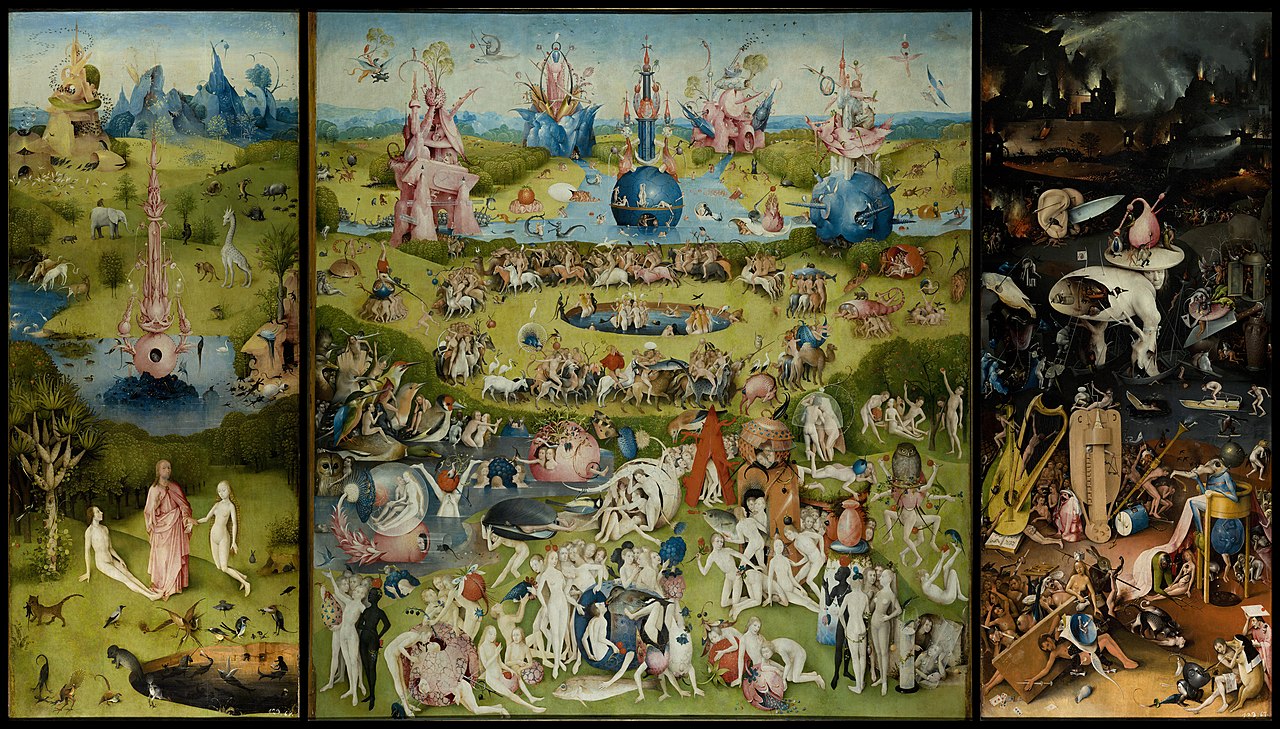
Entrance for students was free, so I decided to buy an audio guide. It helped me make sense of everything, and was definitely a good investment. I learned so much. There were many masterpieces of Spanish and international art inside. So many that it felt like every room had some kind of world-renowned painting. One of the masterpieces that I recognized was The Garden of EarthlyDelights by Hieronymus Bosch. It is amazing to see in real life.
 They also had a huge collection of the work of Franciscode Goya. He is Spain’s most famous painter, and his work covers a huge range. He created many portraits of the royal family, as well as designs for tapestries. But he also had a “black period” near the end of his life, where he painted ever-darker scenes of witchcraft and war. The collection was fascinating to see and hear about.
I thoroughly enjoyed my day at the Prado Museum. I can see why it is one of the jewels of Madrid.

And of course I have to mention the food. I had absolutely no idea what Spanish food would be like. Turns out, it is delicious. Every single meal I had seemed like a simple dish. Like Jamón, Spain’s version of prosciutto ham. Or tortilla, an egg and potato dish. But they were elevated from something simple to something amazing.  And everything comes in smallish portions, like tapas and Bocadillo sandwiches. That way I could eat often and well. The best way to eat, in my opinion. I will save you from a long list of the mouthwatering delights. For having no expectations, Spanish food blew me away.

I now get why so many people go to Madrid on holiday. Who can resist the sunshine in the parks, the fabulous shopping streets that wind through the city, the great food, and the world-class art? I thought four days in Madrid would be long enough to see the city. I was wrong. There was so much left to see and do. I guess I will just have to count down the days until I can return.  


Thursday, June 4, 2015

Taking Time to Be a Tourist


A few weeks ago, my parents came to visit me here in Vienna. They were here a week, which gave me my first real chance to drop everything and just tour Vienna. Before I had tried to see a site here or there, but was also going about daily life. Now I could marathon them all.

We had so much fun exploring the city!  I was their personal tour guide for the week, and we took the “E for everything tour”. That meant I got to see a few places that were still totally new to me. It’s fun to experience the places I’ve been before with my parents, but it was extra fun to try a few new things.

For as long as I have been in Vienna I have been meaning to go to the Belvedere. Eventually, I just decided to save it for my parents’ trip because I hadn’t gotten out there yet. We saw both the Upper and Lower Belvedere. They were built as a palace for Prince Eugene of Savoy in 1723. The Upper Belvedere didn’t stay that way for long, however. Pretty soon it was turned into the imperial painting gallery. It is still an art museum today. 

Visiting the galleries at the Upper Belvedere was pretty awe-inspiring.  Hanging art on stark white walls just isn’t the same as displaying it in a palace. And the palace is so intricate and beautiful inside. Some of the rooms are more plain, but there are quite a few showpiece rooms still left. Check out the marble hall, for example.

One of my favorite moments was when you first enter, there is this white, marble entrance hall with these magnificent, elaborate columns and in the middle was an inflatable Hulk by Jeff Koons. It was a bright pop of color in contrast with the hall. 
Copyright: Belvedere Wien No pictures allowed


  The collection of artwork inside was very nice. It covered quite a long time period, from medieval art all the way to impressionism and the Viennese Secession. The main event, of course, is their collection of works by Gustav Klimt. This included the famous “Kiss” painting, along with many other works. My mother is very into art and art history, so it was especially fun getting her take on many of the paintings featured. 
Seeing the galleries of the Upper Belvedere was great. The Lower Belvedere was cool too. There was an exhibition on the Vienna Congress of 1814 and some more fancy rooms. What made our trip out to the Belvedere more special, however, were the fabulous gardens. Everything that you could wish for in a baroque garden was there: decorative floral arrangements, fanciful fountains, and tree-lined walking paths. All framed by the two gorgeous Belvedere palaces. What a nice place for an afternoon stroll. 


While my parents were here I also wanted to make sure to take them to one of Vienna’s famous concert cafes. And there was one in particular that I had not visited yet, the famous Café Central. It opened in 1876, and has seen its fair share of celebrity guests, including Sigmund Freud, a popular figure in twentieth century Viennese cafes. We went one evening to hear the live piano music. Nothing tops sitting in a beautiful café listening to live music and sipping coffee. And Café Central was certainly beautiful inside.


 Another major bucket list item for all visitors to Vienna that I had not accomplished yet was seeing the Lipizzaner stallions at the Spanish Riding School. Due to time constraints, we decided it would be best to go to the morning exercises. Pictures weren’t allowed, as they might disturb the horses. So you will just have to trust me that this was the fanciest horse arena that I’ve ever seen. There were statues and stucco on the ceiling and red velvet. Nothing like a rodeo in Texas.

The stallions were impressive as well. We watched them being trained. They were so graceful and precise. There is a special stance that they have to maintain as they do different runs and gallops. It was really remarkable and fascinating. You can see the promo clip here. Many people didn’t stay for the whole two-hour show, but we definitely did. They played “Viennese music” from Mozart, Strauss, etc. the whole time. Of course the end was the Radetzky March. We couldn’t clap because of the horses, so we all golf clapped along. 

Showing my parents around definitely helped me cross lots of things off of my bucket list. I only have three weeks left in Vienna now. Where does the time go!? But I was a bit homesick. So, seeing my parents was a real treat. These new highlights were just the cherry on top.


Wednesday, May 20, 2015

All the Best from Budapest


Even though I was only in Budapest for three days, my time there was jam-packed. Every detail of my trip will absolutely not fit into this post. But I wanted to share some of my favorite places I went in Budapest. There are lots of distinct districts and areas in the city. They each have their own charm. These were some of the highlights for me.

Vörösmarty Square
I took a free walking tour of Budapest when I first arrived, and this is where it met. But when I got there, I found that they were having a spring market as well. What a great surprise! This market had everything. Lots of food of course. But also hand-woven baskets, traditional Hungarian embroidery, wreaths of dried fruits and spices, and adorable ceramics. I really enjoyed seeing it, and I’m glad I stumbled on it at just the right time. Plus, it smelled heavenly.


That sign says rooster testicle stew...


Buda Castle District
It is just a short walk from Vörösmarty Square to the Chain Bridge, which will take you across the river to the castle district. The Chain Bridge was the first bridge built across the Danube River. It was built in 1848. It joined what were then two separate cities, Buda and Pest. In 1873, they officially merged to become one city, Budapest.


The Buda side is known for being hillier. It is where the Buda Castle was first established in the 13th century. Construction continued through the 15th century. You can see ruins on the grounds today.
Behind is the President's house. It's the white house.


Most of what you see now are baroque buildings. They were built in the 18th century and used by the Hapsburgs when they ruled Austria-Hungary. 

Fancy Baroque gate

Castle from the river
The baroque castle

Lion guards
Also on this side of the river is the MatthiasChurch. It has seen royal coronations and weddings since at least the 15th century. What I thought was the most impressive part was the patterned roof. It is covered in Zsolnay tiles. They are a  special type of roofing tiles made in Hungary that are prized for their rich color.

Just next to the Matthias Church is the Fisherman’s Bastion. The structure is a lookout across the river. The spectacular view is accompanied by seven white, stone towers. The towers represent the original seven tribes, who were united under Hungary’s first king, St. Stephan. Meant to reflect the unique culture of Hungary, the towers are an unusual shape. I definitely enjoyed walking around, looking at this architecture, and the outstanding views across the river. This is the place to see the famous Parliament building.
You can see St. Stephan on his horse


Margret Island
A collection of three naturally occurring islands in the middle of the Danube, this park has been turned into an urban oasis. After touring the castle district, I went hunting for fresh fried Lángos and a peaceful walk in the park. But, I happened to be there for the finale of the “I Bike Budapest” event. So the park was teeming with bike riders. There was also a fashion show at the fountain. Not quite the peaceful walk in the park I imagined, but a fun night anyway.

I did get my Lángos.

Jewish District
Right next to the very heart of Budapest, Deák Ferenc, the Jewish district is a fascinating blend of history and modern life. The same company who lead the general walking tour also offered a walking tour of the Jewish district. I decided to take one Sunday morning. The tour was super! It was definitely one of the highlights of my trip.

This building marks the beginning of the Jewish district
We started with the more historic side of the district, visiting the three synagogues. Budapest was home to over 200,000 Jewish citizens before World War II. They mostly belonged to three main branches of Judaism, hence the three big synagogues in the Jewish district.  The largest was the Dohány Street Synagogue. It is the second largest in the world. The design of the building is in the Moorish Revival style, and looks much more like a church than a synagogue. It even features an organ that was played by Franz Liszt.  


In the past, there was an apartment building next to the main synagogue. The apartments are gone now, but a plaque remains, commemorating Theodore Herzl, who was born there.


There are also two courtyards.  Both commemorate the Hungarian Jews who died in WWII. One is full of gravestones, marking the mass graves where the Red Army buried the thousands of dead bodies found in the Jewish Ghetto. The other courtyard has a memorial. It is a willow tree in the shape of a menorah, with the names of those who died inscribed on the leaves. I found the memorial very touching.


Although the Dohány Street Synagogue is the largest, we also saw the other two synagogues in the Jewish district. Both of them were heavily influenced by Art Nouveau architecture, although they also incorporated Jewish heritage into the design. The Rumbach Street Synagogue was designed by famous architect Otto Wagner.


The Orthodox Synagogue on Kazinczy Street was built in 1911, and had the most Art Nouveau influence.


I really enjoyed learning all about the history of the Jewish people in Budapest. It was a bit depressing at times, but I learned a lot. Sometimes I feel like I miss out on learning about minority cultures when I am traveling, since I love to focus on majestic royal sites. The sites and history in the Jewish district were just as fascinating as any palace though. 

And the history of the Jewish district doesn’t stop with WWII. It fell into disrepair after the war, during the years of Communism. But it has come back to life. Now it is the hip-happening spot in Budapest. It’s where young people go to shop, eat, and drink. The trendiest places in Budapest are the ruin bars. On our tour we visited the very first one.


Szimple started off as a condemned apartment building being auctioned of by the state. Some young entrepreneurs bought it to try to make a summer cinema for the season. They patched what was really dangerous, and just left everything else. Their idea was a hit. In the end, they opened it as a club/bar year round. Inside the walls are full of scribbling and artwork from guests. All the decorations are made from recycled junk. It is a really cool place.


Since I happened to be there on a Sunday afternoon, I also got to see their weekly farmers market. Local farmers were there selling all kinds of fresh produce and other farm-products. And in the back, the Járókelö organization was selling steaming bowls of soup. For about $2.25 you could have a delicious lunch, and they donated the proceeds to help the homeless. Talk about warming you up from the inside!
Market!

Lovely soup-selling volunteers!


I don’t think anyone would really call me a hipster, but I was in love with the hipster vibe of the modern Jewish district. Unlike the well-scrubbed, white stone buildings of Vienna, the atmosphere was a little more colorful. Things were a bit rough around the edges, but it added to the charm. I especially liked all of the murals around.


Danube River
There is no denying the importance of the river to the city of Budapest. It literally runs through the middle. I visited the river twice. On Monday I used my 24hr metro pass to take the public boat on a cruise down the river. I think the public boats, operated by the metro system, are one of Budapest’s best-kept secrets. I was lucky to get an inside tip about them. There is so much to see along the river. The views are beautiful, and I had the perfect weather. It was a relaxing, enjoyable ride.
My boat!
 
The other time I visited the Blue Danube was on foot. I took a short trip one evening
after sunset to see the sights of Budapest lit up at night. Walking over the Chain Bridge I had a great vantage point to take some pictures.

The Chain Bridge

Buda Castle

Matthias Church and Fisherman's Bastion
Parliament


Citadella
While I was in Budapest, I met Zsuzsanna through couchsurfing.com. She was a very kind local who offered to show me around. We got coffee at the beautiful Book Café on Andrassy Street, Then she took me to see the Citadella.
Beautiful Book Cafe

The Citadella is an old military fortress perched on a hill. It overlooks both Pest and the Buda Castle district. On top of the hill is also the Liberty statue, constructed to commemorate the end of WWII. The Soviets actually built it, but it had become such a part of Budapest that it was left standing after they left.


I hadn’t really been planning on hiking to the top of the hill, but was so glad that I did once I saw the view. It was wonderful to get a chance to meet a new friend in Budapest as well. Thanks again Zsuzsanna!


I feel like I left out so much from my action-packed weekend. But there is simply not room for every little detail. I had such a wonderful time; it was hard to pick just a few favorite things. And a big thanks to my host Erzsébet! I’ve come back with so many pictures, memories, and a new appreciation for the old-meets-new vibe of beautiful Budapest.